AFRICAN POWER
— BRIDGING THE GLOBAL AFRICAN DIASPORA FOR A LASTING CHANGE —


The Strategic Role of the Diaspora and African Leadership for Inclusive and Sustainable Economic Development in Africa
AFRICAN POWER TALKS
3/30/20263 min read
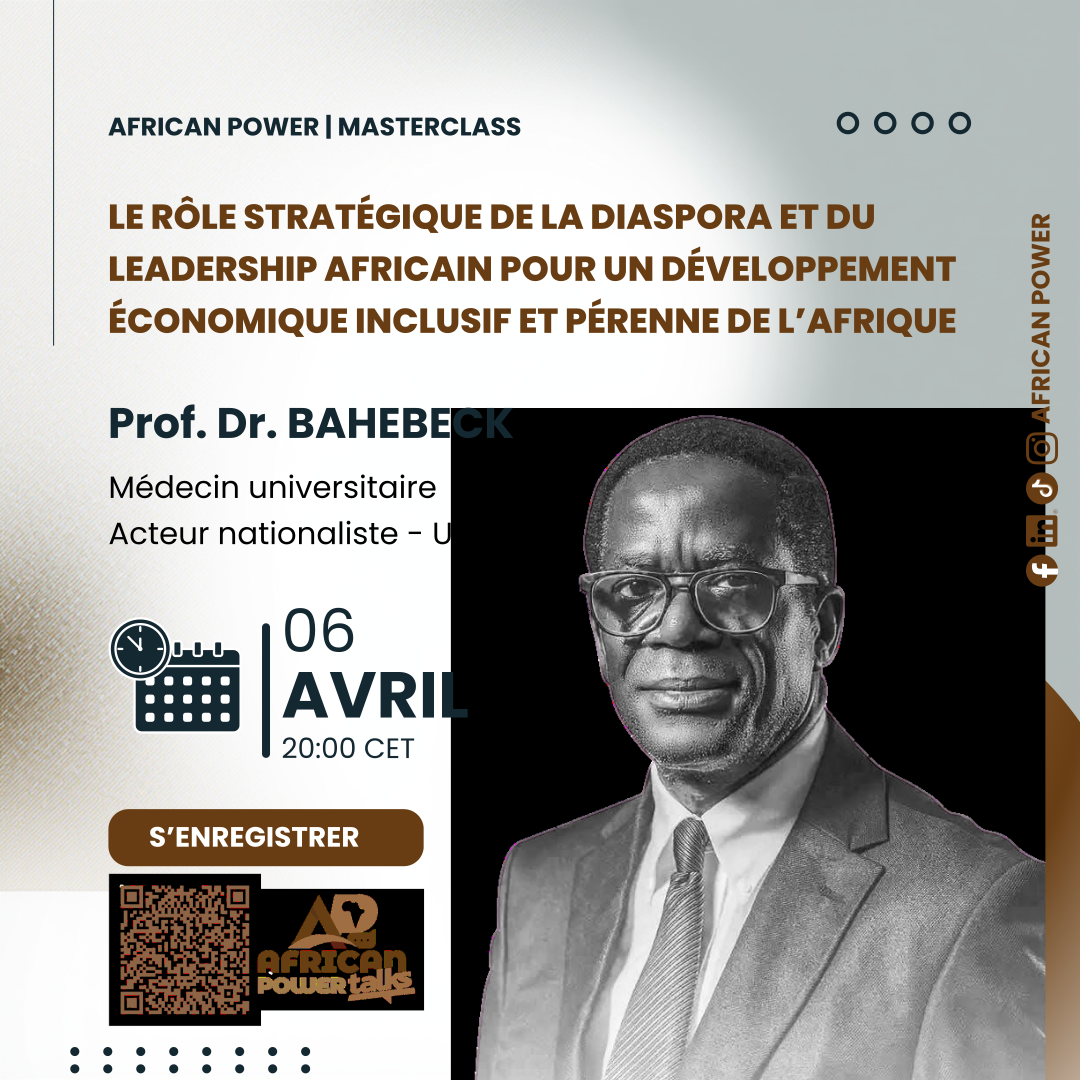
African Diaspora and Leadership: Moving Beyond Rhetoric to Build Real Development Models
Africa does not lack talent, intelligence, or ambition. It lacks structure. For decades, a narrative has taken hold as self-evident truth: the African diaspora is one of the major levers for the continent's development. Skill transfers, investments, international influence... the potential is undeniable. Yet, a more critical question remains: What is the real, structural impact of this diaspora on Africa's economic development?
This is precisely the question addressed by the masterclass hosted by African Power, featuring Professor Bahebeck, centered on the theme: "The Strategic Role of the Diaspora and African Leadership for Inclusive and Sustainable Economic Development in Africa."
1. Clarify Before Acting: Redefining Diaspora and African Leadership
Before discussing impact, fundamental groundwork is required: clarification. Who is the African diaspora today? A homogeneous group? A qualified elite? A dispersed community without common structure?
Similarly, the concept of African leadership often remains vague, sometimes instrumentalized, and rarely questioned in depth. Speaking of leadership without defining its concrete responsibilities produces discourse, not action. Finally, the objective of "inclusive and sustainable" economic development is too often mentioned without a rigorous framework. Inclusive for whom? Sustainable through which mechanisms? Structured by which actors?
This first step is essential: one cannot build anything solid on vague concepts.
2. The Diagnosis: Understanding African Paradoxes
The African continent faces a major paradox:
An abundance of human and natural resources...
...yet weak structural transformation.
This paradox is also found in the diaspora:
Never before so qualified...
...never so present in major global institutions...
...yet still too rarely organized collectively.
Result: Visible individual successes, but limited collective impact.
This observation is not a critique; it is a starting point. Without a lucid diagnosis, transformation is impossible.
3. The Necessary Shift: Moving Beyond the Current Model
If the current model does not produce the expected results, a shift is necessary. The diaspora can no longer be merely:
A source of financial remittances.
A symbol of individual success.
A peripheral actor in African development.
It must become a structured, strategic actor. This implies deeply rethinking its role:
Moving from the individual to the collective.
Moving from emotional to strategic.
Moving from reaction to organization.
This shift is demanding, but unavoidable.
4. African Leadership Facing Its Responsibilities
African leadership can no longer be reduced to figures or speeches. It must be measured by its capacity to:
Organize talent.
Structure initiatives.
Create sustainable frameworks.
The real challenge is not having visible leaders; it is having leaders capable of building systems. This is where the question of inclusion becomes central. Uninclusive development creates fractures; unstructured development does not last. Therefore, the African leadership of tomorrow must be:
Strategic.
Rigorous.
Focused on collective impact.
5. Towards a New Model: Structuring for Sustainability
This masterclass is not just another speech; it is an attempt to reposition the debate.
Move away from narrative.
Move into structuring.
Ultimately, the question is no longer whether the diaspora can contribute. The question is: How can we organize this contribution to make it a systemic driver of development?
African Power: Building Bridges, Structuring Impact
This is precisely the philosophy of African Power. Not just a platform for occasional discussion, but an initiative aimed at:
Connecting talent.
Structuring skills.
Transforming individual trajectories into collective impact.
This masterclass with Professor Bahebeck is part of this continuity: setting a demanding, lucid, and action-oriented framework.
Conclusion: Moving from Intention to Transformation
Africa no longer needs more promises. It needs:
Clarity.
Structure.
Responsibility.
The African diaspora represents a historic opportunity. But an unstructured opportunity is a wasted opportunity. The time of potential is over. The time for organization begins.
African Power
Structuring, connecting, and fostering the emergence of African leadership.